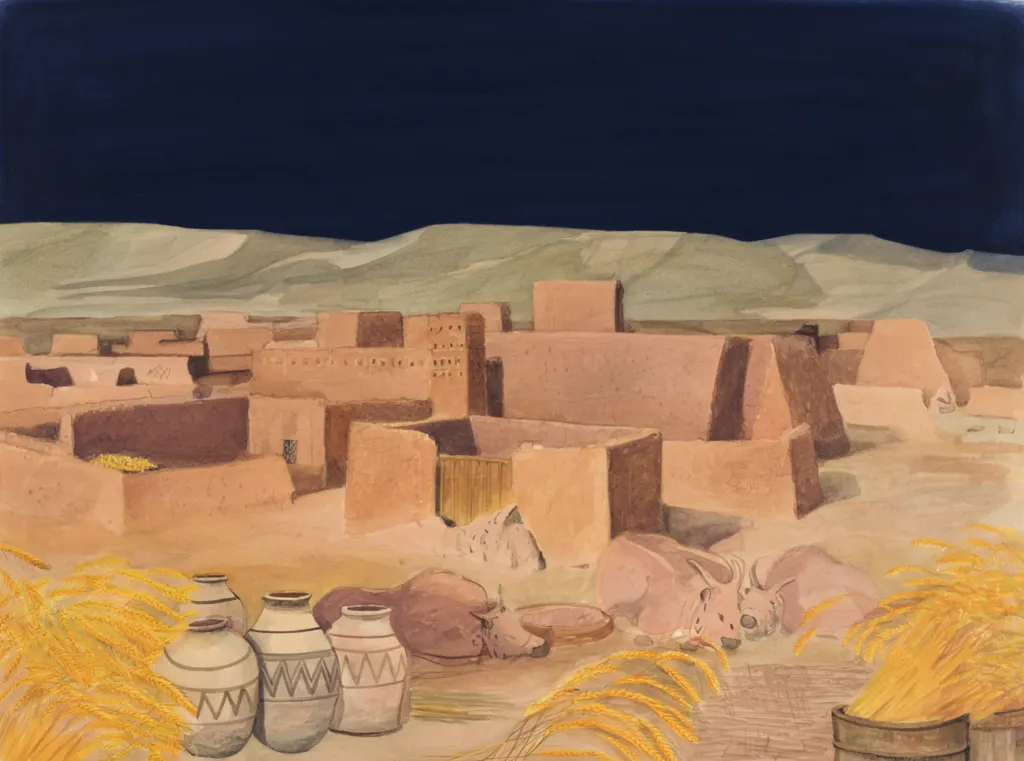
1. c. 7000 – 3300 BCE · Mehrgarh
Long before any Vedic hymn, people in South Asia were farming barley and wheat, herding humped zebu cattle and burying their dead with grave goods.
2. c. 3300 – 1300 BCE · Mohenjo-daro and Harappa
The Indus script survives on about four thousand objects and is still undeciphered, so everything said about Harappan religion is inference.
3. c. 1500 – 1200 BCE · Sapta Sindhu
The Rigveda's hymns were composed and memorised without writing and passed on with astonishing accuracy for about a thousand years.
First seen: Rta, the cosmic order (c. 1400 BCE); Doubt voiced in scripture (c. 1100 BCE); The four varnas named (c. 1100 BCE).
4. c. 1200 – 900 BCE · Kuru-Panchala
Between about 1200 and 900 BCE the centre of Vedic life moved east from the Punjab into the Ganga–Yamuna doab.
First seen: Iron (c. 1200 BCE); Rice (c. 1100 BCE); "Namah Shivaya" (c. 1000 BCE); Ritual that moves the cosmos (c. 900 BCE).
5. c. 900 – 500 BCE · Videha and Kosala
Karma as moral cause, rebirth, liberation and the identity of the Self with the absolute first appear in texts of about 700–500 BCE.
First seen: Karma as moral causation (c. 700 BCE); Rebirth, samsara (c. 700 BCE); Moksha, liberation as the goal (c. 700 BCE); Atman is Brahman (c. 700 BCE).
6. c. 600 – 200 BCE · Magadha
Buddhists, Jains and Ajivikas accepted karma and rebirth but rejected the Veda, animal sacrifice and the authority of brahmins.
First seen: Ahimsa as a supreme value (c. 500 BCE); Renunciation as an institution (c. 500 BCE); Writing (c. 250 BCE); Vegetarianism as an ideal (c. 250 BCE).
7. c. 200 BCE – 300 CE · Mathura and Vidisha
Image worship, temples, bhakti and the avatar doctrine all first become visible between about 200 BCE and 300 CE.
First seen: Bhakti, devotion, attested (c. 110 BCE); Avatara, God takes birth (c. 1 CE); The sacred image, murti (c. 50 CE); Manu's law book (c. 50 CE).
8. c. 300 – 650 CE · Udayagiri and Deogarh
Between about 300 and 650 CE the stone temple, image worship, pilgrimage and the festival calendar took the shape they still have.
First seen: The stone temple (c. 400 CE); Tantra in writing (c. 500 CE); The supreme Goddess (c. 575 CE).
9. c. 650 – 1200 CE · Thanjavur and the Kaveri delta
Tamil poet-saints made devotion in a spoken language a path to God open to women and outcastes.
First seen: Advaita as a system (c. 725 CE); Scripture in Tamil (c. 750 CE); The Brihadisvara temple (c. 1010 CE).
10. c. 1200 – 1750 CE · Banaras and the Sant country
From about 1200 to 1750 bhakti moved fully into regional languages, and 'Hindu' began to be used as a religious self-description in contrast to 'Turk'.
First seen: "Hindu" as self-description (c. 1350 CE); Scripture in Awadhi (1574 CE).
11. c. 1750 – 1947 CE · Calcutta
In 1750 there were many sampradayas and no single religion called Hinduism; by 1947 there was one.
First seen: "Hinduism" as a world religion (1800 CE); All paths lead to one truth (1893 CE).
12. 1947 – today · Delhi
After 1947 the Indian state became a legislator for Hindu life: Article 17 abolished untouchability and the Hindu Code Bills of 1955–56 rewrote family law.
First seen: Codified Hindu law (1955 CE).
 KarmaVaani