 KarmaVaani
Festival · March–April
Ugadi and Gudi Padwa
Also known as Hindu lunar new year
The lunar new year on Chaitra Shukla Pratipada, kept as Ugadi in the Deccan and as Gudi Padwa in Maharashtra.
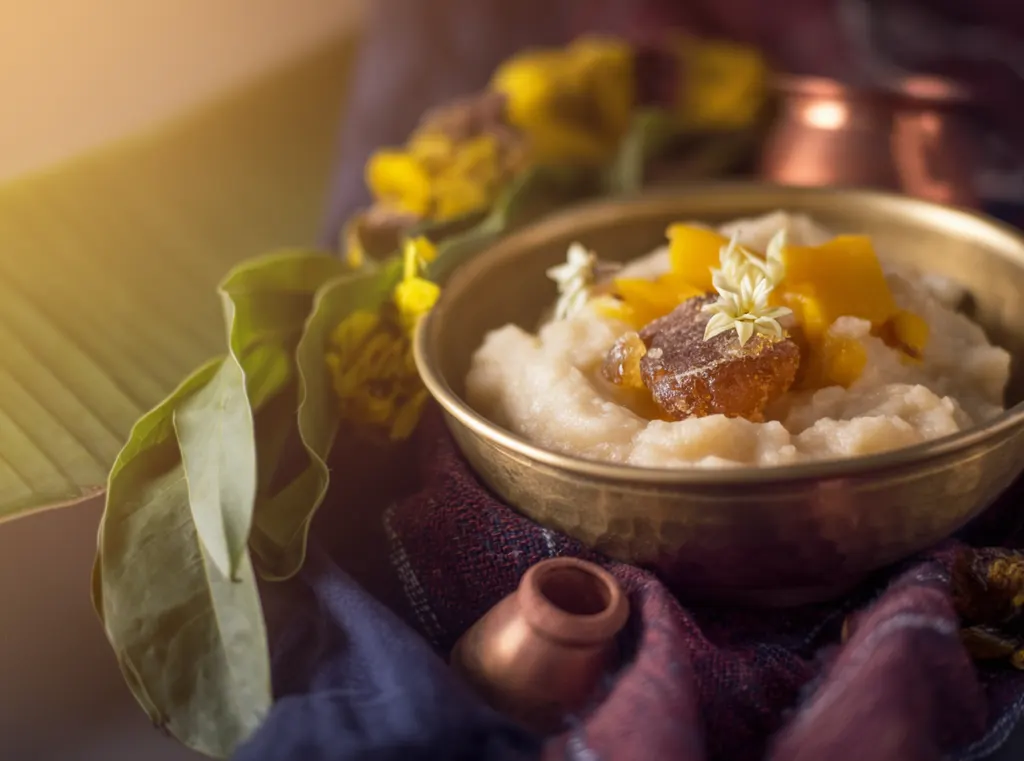
The first day of the bright fortnight of Chaitra begins the new year in the lunar calendar. In Karnataka, Andhra Pradesh and Telangana it is Ugadi; in Maharashtra and Goa, Gudi Padwa. Homes are cleaned, doorways decorated with mango leaves, and the year begins with a taste of every flavour of life.
Why it is kept
Tradition holds that Brahma began creation on this day. The new Samvatsara, the named year of the sixty-year cycle, begins.
Step by step
How to observe it
Oil bath and new clothes
The day begins with an oil bath before sunrise and new clothes.
Raise a gudi
In Maharashtra a pole topped with an upturned pot, silk cloth, neem and marigold is raised at the window or door.
Taste Ugadi pachadi
A dish of six tastes, including neem flowers, jaggery, raw mango, tamarind, salt and chilli, stands for the sweet and bitter of the coming year.
Hear the panchang
Families gather to hear the panchang for the new year read aloud, panchanga shravanam.
Customs differ between regions, communities and families. Where your family or temple has its own way, follow it.
Fasting
Fasting
Not a fasting day.
Fasts should suit your health. Children, elders, pregnant women and anyone unwell or on medication should eat, or keep a lighter fast; that is the tradition, not an exception to it.
Traditions
- Ugadi pachadi
- Raising the gudi
- Hearing the new year’s panchang
- Oil bath at dawn