 KarmaVaani
Festival · April
Baisakhi, Vishu and the solar new year
Also known as Puthandu, Bohag Bihu, Pohela Boishakh, Pana Sankranti
The sun enters Mesha (Aries), and much of India celebrates the new year and the harvest.
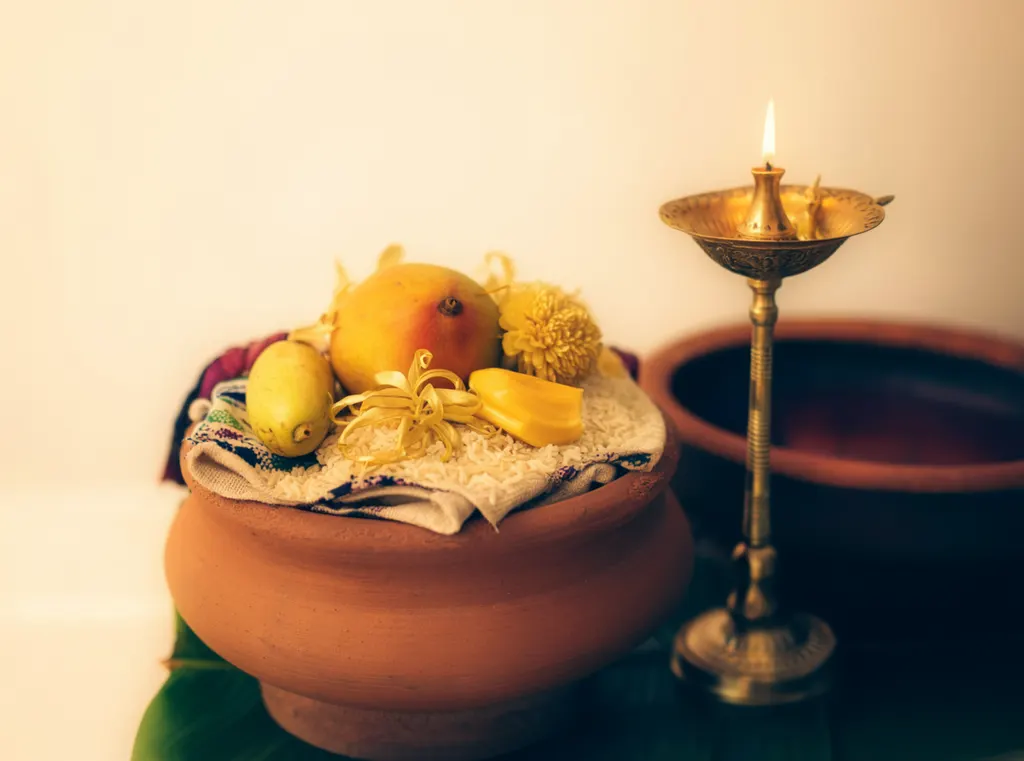
Mesha Sankranti, usually on 13 or 14 April, begins the solar year. Punjab celebrates Baisakhi as a harvest festival; Kerala keeps Vishu, waking to the Vishukkani; Tamil Nadu marks Puthandu; Assam dances Bohag Bihu; Bengal greets Pohela Boishakh; Odisha keeps Pana Sankranti.
Why it is kept
Where the year is reckoned by the sun, this is New Year’s Day.
Step by step
How to observe it
See the Vishukkani
In Kerala the first sight on waking is an arrangement of rice, fruit, gold, a mirror and konna flowers before Krishna.
Give and receive
Elders give gifts or money (Vishu kaineettam) to younger family members.
Celebrate the harvest
Baisakhi and Bohag Bihu are kept with dance, music and feasting.
Customs differ between regions, communities and families. Where your family or temple has its own way, follow it.
Fasting
Fasting
Not a fasting day.
Fasts should suit your health. Children, elders, pregnant women and anyone unwell or on medication should eat, or keep a lighter fast; that is the tradition, not an exception to it.
Traditions
- Vishukkani, the first sight of the year
- Harvest celebrations
- New clothes and feasts