KarmaVaani
Festival · October
Sharad Purnima
Also known as Kojagari Purnima, Raas Purnima
The brightest full moon of the year, when kheer is left in the moonlight.
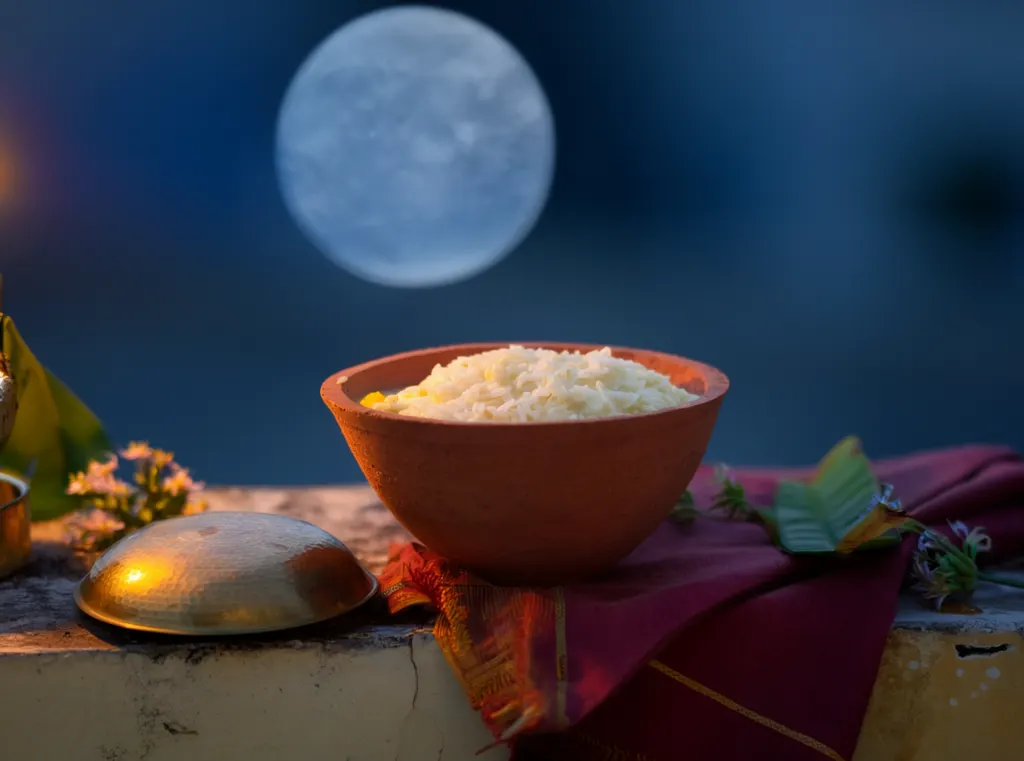
The full moon of Ashvina is said to be the only one in the year when the moon shines with all sixteen kalas. Kheer is left out in its light overnight and eaten in the morning. In Bengal and Odisha, Lakshmi is worshipped as Kojagari Lakshmi, who asks “who is awake?”; in Vraja, it is the night of Krishna’s Raas Lila.
Why it is kept
It celebrates the end of the monsoon and the moon at its fullest.
Step by step
How to observe it
Leave kheer in the moonlight
Rice kheer is placed in moonlight through the night and taken as prasad in the morning.
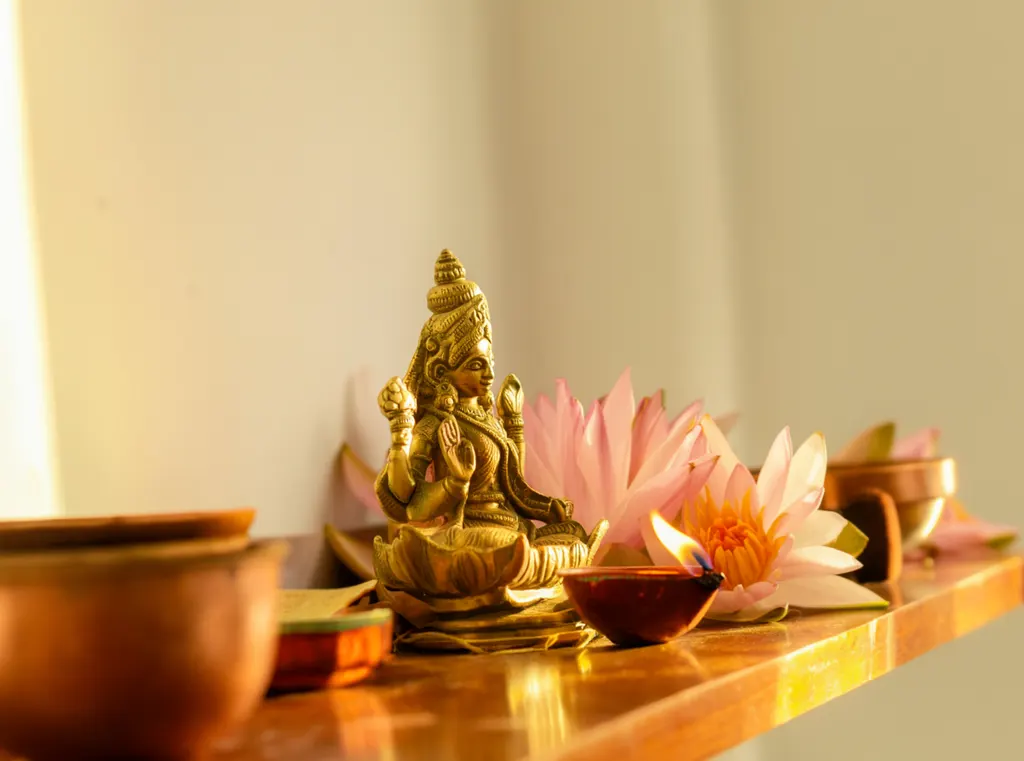
Worship Lakshmi at night
In Bengal and Odisha, Lakshmi is worshipped in the evening and the family keeps awake.
Customs differ between regions, communities and families. Where your family or temple has its own way, follow it.
Fasting
Fasting
Some fast during the day and break it after moonrise.
Fasts should suit your health. Children, elders, pregnant women and anyone unwell or on medication should eat, or keep a lighter fast; that is the tradition, not an exception to it.
Traditions
- Kheer in the moonlight
- Kojagari Lakshmi puja
- Staying awake through the night
पूजा सामग्री