 KarmaVaani
Vrat · September–October
Pitru Paksha and Mahalaya
Also known as Shraddha
A fortnight for remembering ancestors, ending on Mahalaya Amavasya.
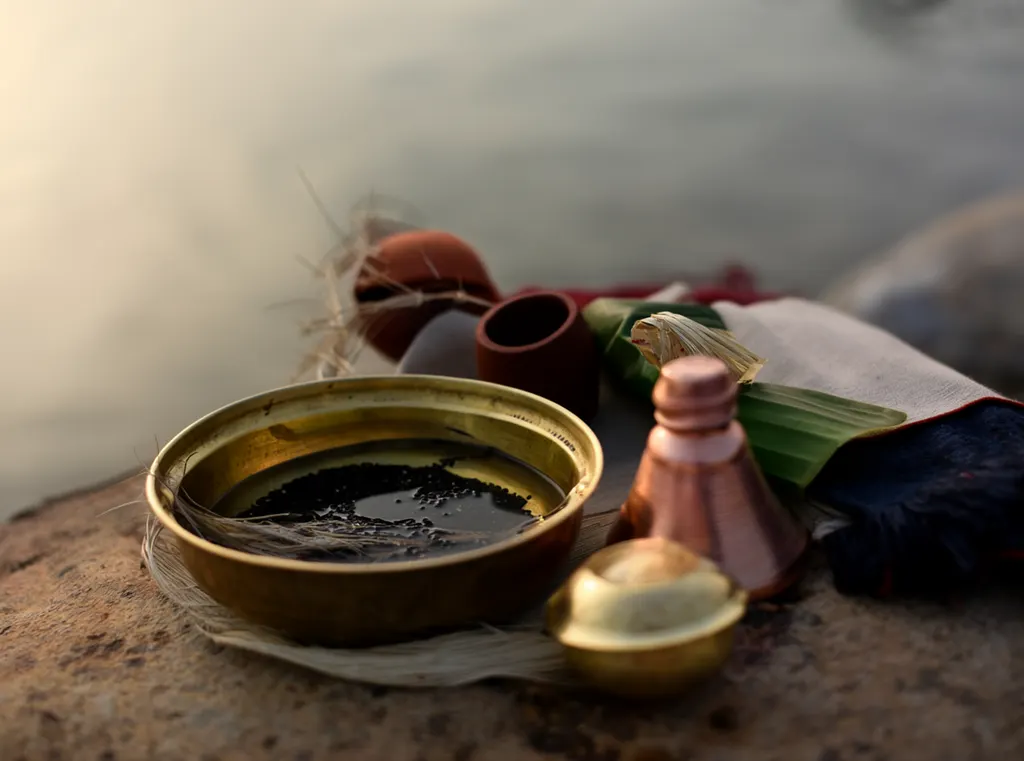
The dark fortnight before Navaratri is set aside for the pitrs, the ancestors. Families offer tarpan, water mixed with sesame, and shraddha, food offerings, on the tithi on which a parent or grandparent died. Mahalaya Amavasya, the last day, is for all ancestors, including those whose tithi is not known. In Bengal it also marks the beginning of the Devi Paksha.
Why it is kept
It repays the debt to those who came before, the pitru rina.
Step by step
How to observe it
Offer tarpan
Water with black sesame and kusha grass is offered while remembering ancestors by name.
Shraddha on the right tithi
Food is prepared and offered on the tithi of the ancestor’s death, often guided by a priest.
Feed others
A portion is given to crows, cows and dogs, and to the needy.
Customs differ between regions, communities and families. Where your family or temple has its own way, follow it.
Fasting
Fasting
Many avoid celebrations and new purchases during the fortnight; the person performing shraddha eats only after it.
Fasts should suit your health. Children, elders, pregnant women and anyone unwell or on medication should eat, or keep a lighter fast; that is the tradition, not an exception to it.
Traditions
- Tarpan
- Shraddha
- Feeding Brahmins, cows, crows and the needy