KarmaVaani
Festival · January
Makar Sankranti
The sun's northward turn, marked by harvest and gratitude.
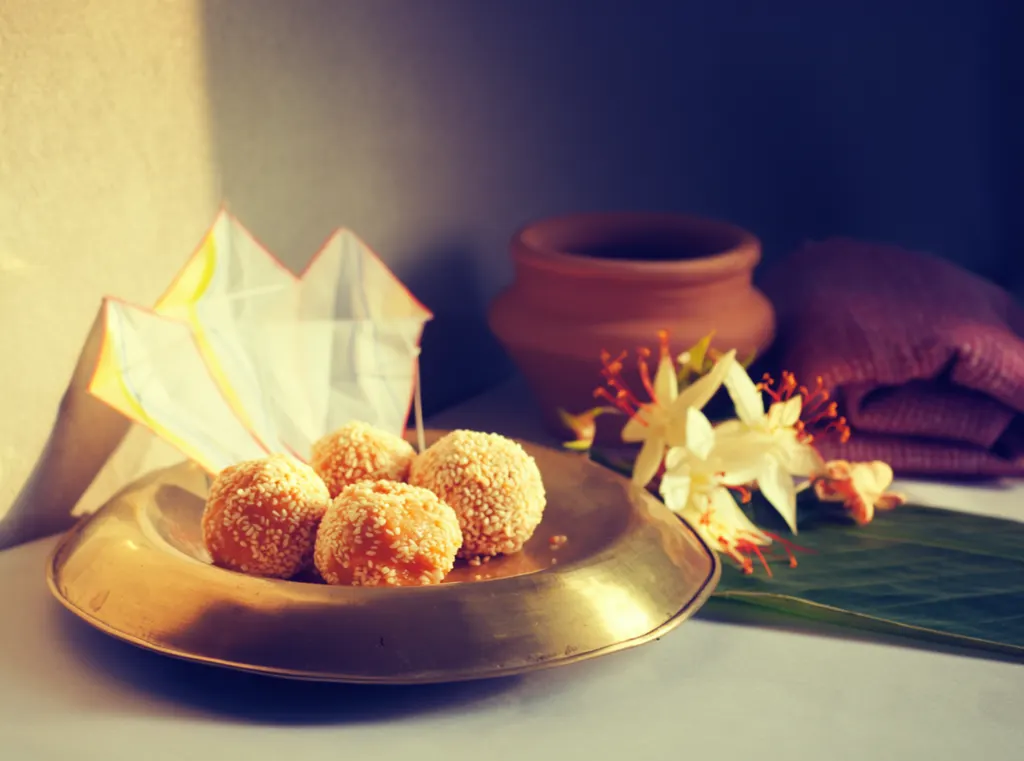
Makar Sankranti honours Surya, the sun, as it begins its northward journey (uttarayana), heralding longer days and the harvest. Celebrated regionally as Pongal, Lohri, Bihu, and Uttarayan, it features kite flying, sesame-and-jaggery sweets, and holy bathing in sacred rivers. It is one of the few festivals fixed to the solar calendar.
Why it is kept
The sun enters Makara (Capricorn) and begins its northward journey, uttarayana. It is one of the few festivals fixed by the sun rather than the moon, and is kept as a harvest festival across India.
Step by step
How to observe it
Take a holy dip
Bathing in a river at sunrise is considered especially meritorious; at Prayagraj the Magh Mela gathers pilgrims.
Give to others
Gifts of sesame, jaggery, rice, khichdi and warm clothes are given away. Charity on this day is especially valued.
Sweets of sesame and jaggery
Til-gud laddoos are shared with the words “eat sweet, speak sweet” in Maharashtra.
Regional celebrations
Gujarat flies kites for Uttarayan, Tamil Nadu boils new rice for Pongal, Assam feasts for Magh Bihu, Punjab lights the Lohri bonfire the night before.
Customs differ between regions, communities and families. Where your family or temple has its own way, follow it.
Fasting
Fasting
Not a fasting day. Many eat only after bathing and giving charity.
Fasts should suit your health. Children, elders, pregnant women and anyone unwell or on medication should eat, or keep a lighter fast; that is the tradition, not an exception to it.
Traditions
- Holy river bathing
- Kite flying
- Til-gud sweets
- Harvest feasts
Where to go
Temples to visit

पूजा सामग्री