KarmaVaani
Vrat · October–November
Karva Chauth
Married women fast from sunrise until moonrise for their husbands’ wellbeing.
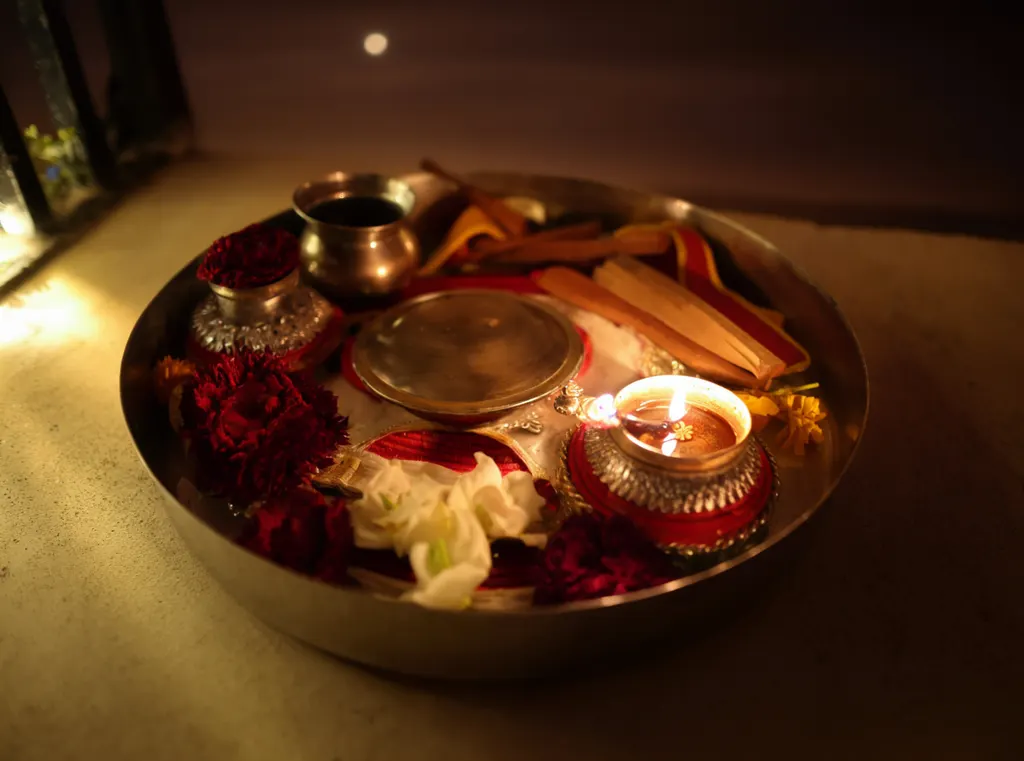
Karva Chauth falls on the Krishna Chaturthi of Kartika (Ashvina in the Amanta reckoning) and is kept above all in North India. Married women eat sargi before dawn, then fast without food or water until the moon rises, when they view it through a sieve, offer water and break the fast.
Why it is kept
It is kept for the husband’s long life, and in many families now by both partners.
Step by step
How to observe it
Sargi before sunrise
A pre-dawn meal, often prepared by the mother-in-law.
The fast
No food or water from sunrise until moonrise.
Evening katha and puja
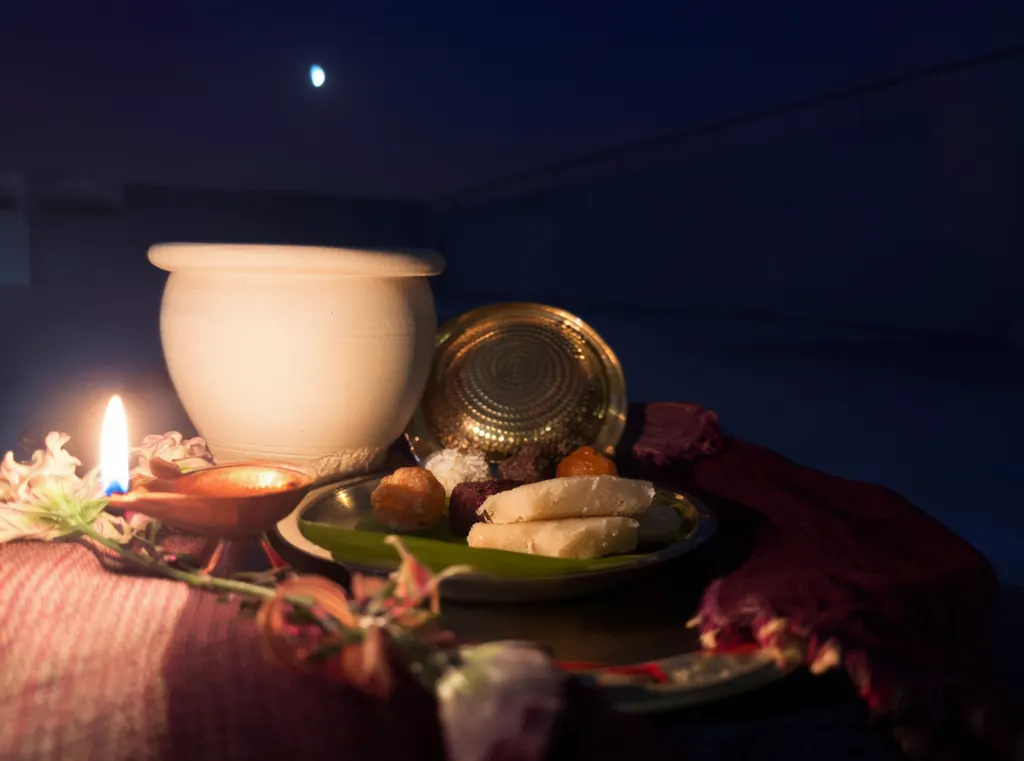
Women gather, pass the karva (an earthen pot) and hear the story of Veeravati.
Moonrise
The moon is viewed through a sieve, water is offered to it, and the fast is broken.
Customs differ between regions, communities and families. Where your family or temple has its own way, follow it.
Fasting
Fasting
Nirjala from sunrise until moonrise. Pregnant women and the unwell often keep a fruit fast instead.
Fasts should suit your health. Children, elders, pregnant women and anyone unwell or on medication should eat, or keep a lighter fast; that is the tradition, not an exception to it.
Traditions
- Sargi before dawn
- Evening katha
- Viewing the moon through a sieve
पूजा सामग्री