 KarmaVaani
Festival · March
Holi
The festival of colours, welcoming spring and the triumph of devotion over arrogance.
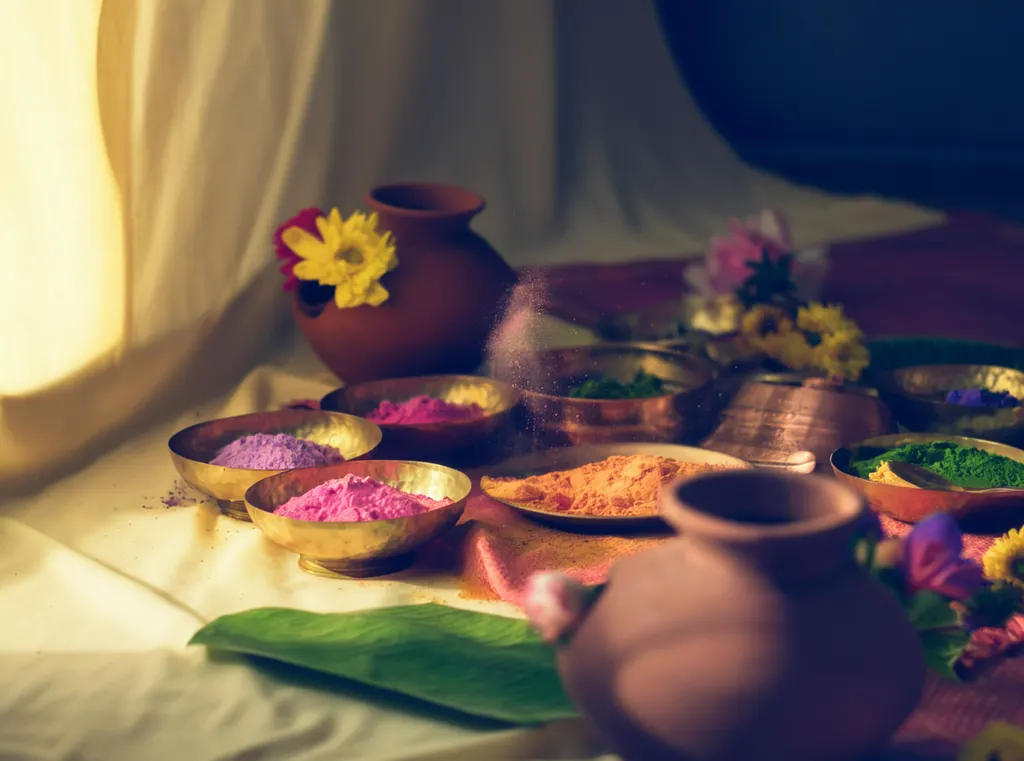
Holi celebrates the arrival of spring and the playful love of Krishna and Radha, with people drenching one another in coloured powders and water. The night before, bonfires (Holika Dahan) recall the story of Prahlada, whose devotion to Vishnu protected him from the fire meant to destroy him. It is a day when social barriers dissolve in shared joy.
Why it is kept
Holi marks the full moon of Phalguna and the arrival of spring. The bonfire the night before recalls Prahlada’s faith outlasting Holika’s fire; the colours of the next day recall Krishna’s play in Vraja.
Step by step
How to observe it
Holika Dahan on the full-moon night
A bonfire is lit after sunset on the Purnima. People circle it, offer grain, coconut and new crops, and pray for protection.
Play with colour the next morning
On the day after, friends and family smear one another with gulal and coloured water. Old disputes are traditionally set aside.
Visit and share festive food
Afternoons are for visiting homes with gujiya, thandai and other seasonal sweets.
Customs differ between regions, communities and families. Where your family or temple has its own way, follow it.
Fasting
Fasting
No fast is required. Some keep a light fast on the day of Holika Dahan until the evening puja.
Fasts should suit your health. Children, elders, pregnant women and anyone unwell or on medication should eat, or keep a lighter fast; that is the tradition, not an exception to it.
Traditions
- Holika Dahan bonfire
- Playing with colours
- Folk songs and dance
Where to go


