KarmaVaani
Vrat · October–November
Chhath Puja
Four days of worship of the sun and Chhathi Maiya, with offerings at the river at sunset and sunrise.
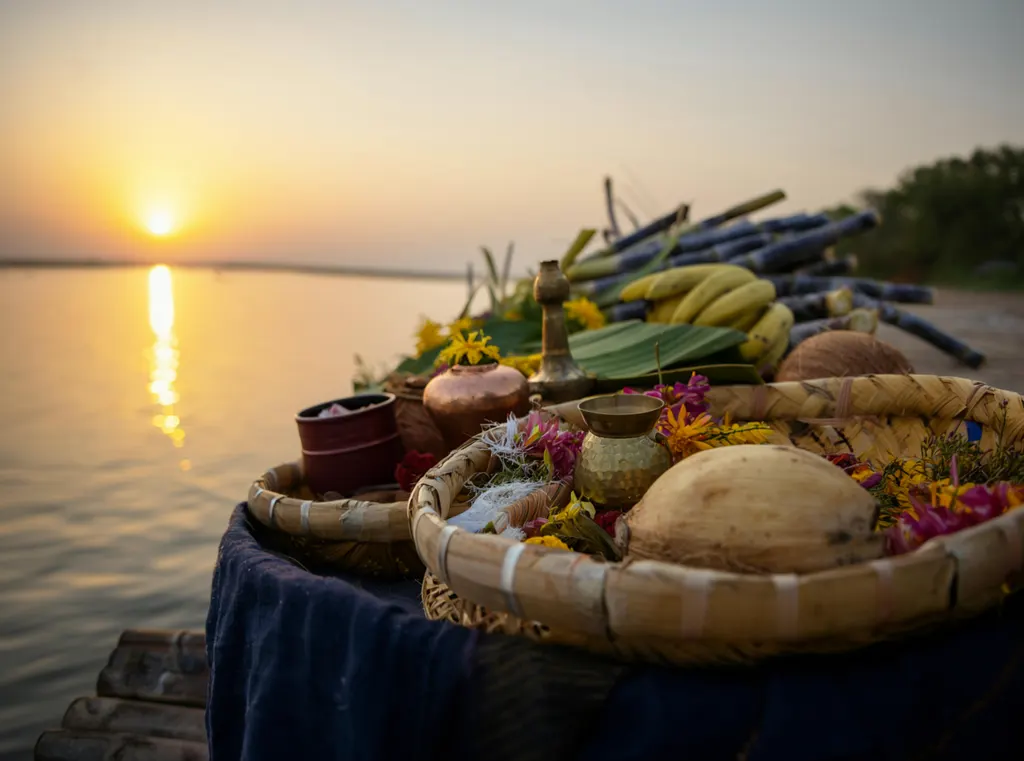
Chhath is kept from the Shukla Chaturthi to the Saptami of Kartika, above all in Bihar, Jharkhand and eastern Uttar Pradesh. It is among the most demanding vrats in Hindu practice, with a long fast without water, and among the most communal, with whole neighbourhoods gathering at rivers and ponds to offer arghya to the setting and the rising sun.
Why it is kept
It thanks the sun for sustaining life, and asks blessings for the family’s health and children.
Step by step
How to observe it
Day 1, Nahay Khay
After a holy bath, the vratin eats a single sattvic meal, often lauki and chana dal with rice.
Day 2, Kharna
A day-long fast is broken in the evening with kheer of jaggery and rice and roti, after which the fast without water begins.
Day 3, Sandhya Arghya
At sunset, standing in water, the vratin offers arghya to the setting sun with baskets of fruit and thekua.
Day 4, Usha Arghya
Before sunrise the family returns to the water; after arghya to the rising sun, the fast is broken.
Customs differ between regions, communities and families. Where your family or temple has its own way, follow it.
Fasting
Fasting
About thirty-six hours without food or water, from Kharna evening to the morning arghya. Only for those whose health allows it.
Fasts should suit your health. Children, elders, pregnant women and anyone unwell or on medication should eat, or keep a lighter fast; that is the tradition, not an exception to it.
Traditions
- Nahay Khay
- Kharna
- Evening arghya
- Morning arghya
- Thekua prasad
पूजा सामग्री