 KarmaVaani
Nineteen Small Sadhana Habits for a Steadier Day
Sadhana is something you do on the days it feels like nothing at all. Nineteen small practices across the day — a lamp, five minutes of repeating a name, one verse read slowly, a walk, an honest evening review.
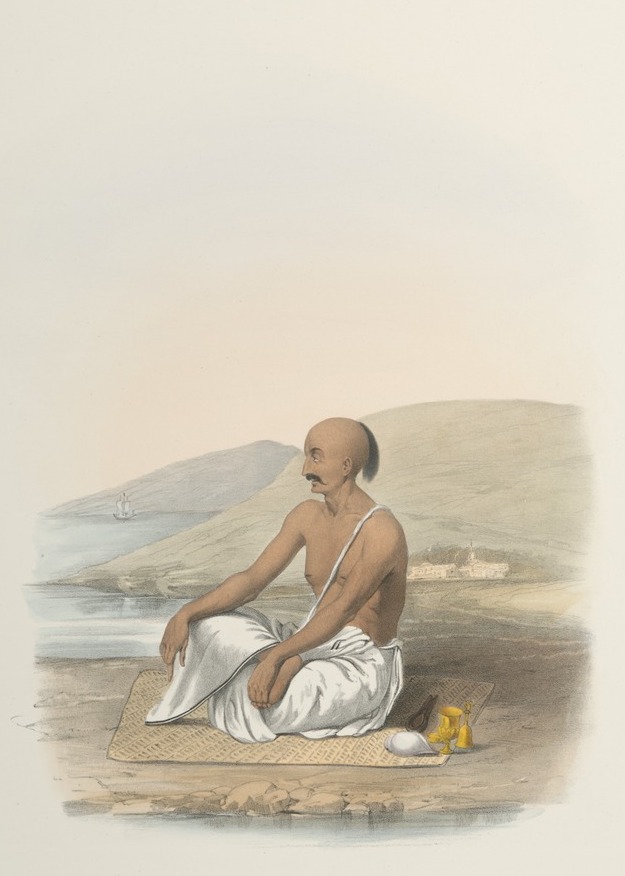
What sadhana actually asks
Sadhana means disciplined spiritual practice — the word comes from a root meaning to accomplish, to bring something to completion. The emphasis in that root is worth noticing. Nobody waits for sadhana to arrive as a mood; it is something you do, on the days it feels like nothing at all.
When Arjuna objects that the mind is restless and turbulent, as hard to hold as the wind, Krishna does not hand him a technique. He gives him two words: abhyasa, repeated practice, and vairagya, a loosening of grip (Bhagavad Gita 6.35). Repetition is half of it. What follows is a menu of nineteen small repetitions, not a rule and not a syllabus. Take two. Take three at the outside.
It matters to say plainly that traditions prescribe differently here. Roughly: Advaita holds that practice purifies the mind so that knowledge of the self's non-difference from Brahman, ultimate reality, can take hold; Vishishtadvaita treats the self as real and eternally God's own, reached through bhakti, devotion, and prapatti, surrender; Dvaita maintains an eternal distinction between soul and Lord, and reads practice as service. Vaishnava households turn a tulsi mala, a string of beads counted through the fingers; Shaiva households a rudraksha one, strung from the seeds of that tree. Some lineages hold that a mantra must be received from a guru at initiation; others, especially in the bhakti streams built on nama-sankirtan, the communal singing of the divine name, hold that the name belongs to anyone who says it. Many families have no formal lineage at all and do what their grandmother did. Find out what your own tradition asks before you take a stranger's list as instruction.
Morning
1. Wake a little before the household. The 48-minute period that begins about an hour and a half before sunrise is called brahma muhurta, traditionally reckoned the best time to sit — the house is quiet, and so, briefly, are you. The realistic version is fifteen minutes earlier than everyone else, not four in the morning.
2. Give the first minute of attention away. Many families teach children to touch the floor before their feet do, asking the earth's pardon for standing on her. Whatever form you use, the point is that the day's first act is not reaching for the phone.
3. Bathe before you approach the shrine. In most households the order is fixed: attend to the body, then light the lamp. When the commute makes that impossible, wash hands and face and do not treat the shortcut as a failure.
4. Light a lamp. One diya — a small clay lamp with a cotton wick — thirty seconds. A leaf, a flower, a fruit, water, offered with devotion, is received (Gita 9.26). Scale is not the variable that matters.
5. Japa, five minutes. Repetition of a name or mantra, usually on a mala of one hundred and eight beads. Five honest minutes at the same hour each day will outlast a full round attempted at midnight. If you are unsure which mantra is yours, ask someone in your tradition rather than the internet.
6. One verse, read slowly. Svadhyaya, the study of scripture, is named in the Gita among the austerities of speech (17.15). The Gita runs to about seven hundred verses depending on the recension; at one a day, with a translation you trust, that is a little under two years.
7. State the day's intention. A sankalpa is a formal resolve, spoken aloud before an observance. Yours can be one sentence, said once, about the thing you actually intend to do today.
Through the working day
8. Pause before eating. Food is received, not seized; the Gita has Krishna say he is the fire in the body that digests what is eaten (15.14). Two seconds of silence before the first bite, in a canteen, counts.
9. Restraint in speech. Speech that causes no distress, that is truthful, kind and beneficial — this is named a tapas, an austerity, in the same verse as svadhyaya (Gita 17.15). It is the hardest practice on this list and the only one with an immediate effect on other people.
10. Refuse the loop. The Gita traces a chain: brooding on an object breeds attachment, attachment breeds desire, desire breeds anger, and anger ends in the ruin of judgement (2.62-63) — an unnervingly good description of what a grievance does when fed by a phone at a bus stop. Notice the second link and stop there.
11. Do the work without auditing it hourly. You have a claim on the action, not on its fruits (Gita 2.47). In practice this is small: send the thing, then close the tab where the replies would appear.
12. Walk. Pradakshina, circumambulation, is among the oldest and most widespread devotional movements there is — a body going around what it honours. A slow lap of the block without headphones is closer to it than it sounds.
13. Give something small. Dana, the gift, is meant to be regular rather than dramatic. A fixed, unimpressive sum given on the same day each month builds a habit that one rare large gift does not.
14. Feed something that cannot pay you back. The householder's five daily offerings — to the sages, the gods, the ancestors, other beings and guests — are set out in the Dharmashastra tradition (Manusmriti 3.70). The offering to other beings is easiest to keep in a city: water on the balcony, a handful of rice for the crows.
Evening
15. Mark the turn of the light. Sandhya is the joint between day and night, traditionally an hour for prayer; the formal sandhyavandana is prescribed thrice daily in some communities and not observed in others. If you lit a lamp in the morning, this is the hour to put it out deliberately rather than let it gutter — two minutes at dusk, whatever else the evening holds.
16. Say something aloud. A stotra — a hymn of praise — an aarti, the lamp offering sung before the deity, a single name repeated. Sound does work that silent reading does not, and children in the room learn it without being taught.
17. Review the day honestly. Sit for two minutes and look at where you were careless, ungenerous, or untruthful. This is not a scourging. It is the same operation as checking your accounts: brief, factual, and useless if postponed.
18. Eat light, and sleep at the same hour. Yoga is not for one who eats too much or too little, or sleeps too much or too little; moderation in food, activity and sleep is what makes practice possible at all (Gita 6.16-17). Of the nineteen items here, this one quietly determines whether the rest happen.
19. Hand the day over. Whatever is unresolved at bedtime, set it down. For Sri Vaishnavas especially, Krishna's final instruction — abandon all dharmas and take refuge in me alone (Gita 18.66) — is the charama shloka, the verse of complete surrender; other traditions read its scope differently. At the level of someone switching off a lamp, it means the day is finished and you need not keep carrying it.
Consistency is the whole mechanism. One practice held for a year changes something. An elaborate routine kept for eleven days and abandoned changes nothing, and can leave you readier to believe that practice is not for you — which is the only real loss in the exercise. The list above is somebody else's; two items from it, chosen because they fit your house, will outlast all nineteen.
A small clay lamp holds about twenty minutes of oil. That is not a long time to sit. It is long enough that you notice, on the mornings you skip it, that you skipped it.